Thursday, April 18, 2013

Day 215: What about the things no-one wants to do? Civic Duty and EMC


A question that gets asked a lot, concerns the jobs like garbage processing -- and other tasks that nobody really wants to do. 

People often tell us that Equal Money Capitalism and the Equal Money System are very utopian -- then when it turns out that we still have to do things like taking care of our garbage and that we don't really have a choice in this -- then Equal Money and Equal Money Capitalism suddenly turn into tyrannies.

The problem is that we will always have consequences in our world. There is no way around it. People react to Equal Money because we are in fact proposing a system of responsibility. And to take responsibility and treat one another and the Earth in a manner that is Best for All, takes some consideration and puts us in a position where we have to do things -- things we may not want to do -- but things that simply have to be done, in order for there to be some form of harmony and equilibrium in our world. 

I mean, you can look even at your own household situation. Taking out the trash bag and tying it close is not a fun job. But you do it because if you don't you're going to end up with a mountain of trash in your house and make your place of living hazardous to breathe in. The same goes for our global household keeping, as our management of the Earth as a whole. Someone is going to have to pick up the trash, someone is going to have to process the trash -- for everyone to continue being able to live in a healthy and harmonious way on Earth. 

So what we do in our own household in terms of those jobs that are 'not so nice'-- we have a rotational system where everyone once in a while has to tend to those 'not so nice jobs'. Yes, it's not fun, but it needs to be done so it gets done from a starting point of principle, and from a starting point of understanding that if it doesn't get done, it's going to create consequence, and no-one likes to do it, so let's all share the task -- then it's spread out more and doesn't become a 'big thing' that only 'one person' has to do.

So in terms of those jobs that need to be done but no-one really wants to do -- we'll have a rotational system, where once in a while it will be your turn to contribute to maintaining the equilibrium in society and the Earth -- where for a moment, you will be participating in a task which is 'not so nice' -- but needs to be done to keep everything else nice. This will be part of one's Civic Duties -- just as in the current system where you can be called up for jury duty, something you may not particularly want to do -- but have to do within being part of society.

Sunday, April 14, 2013

Day 214: Guns, Nuclear Weapons and Human Stupidity - Win-Win Solutions with Equal Money

It seems that the more technological advances we make, the more stupid we become. How many of us do our mathematical calculations on paper, or in our heads like we were taught in school? Barely anyone, most have lost the skill since there's calculators doing it for us. But apart from this obvious example, we can observe the devolution of the human intellect in the development of nuclear weapons. And not only the first development of them - but the continued development of nuclear weapons after they have already been used twice - both times showing the absolute devastation these weapons cause, not only for those hit at the specific place and time - but also for generations to come and for the environment - and thus, seeing that we all live in one big eco-system that is the planet Earth - for everyone.

The use of nuclear weapons is an absolute lose-lose situation. It's the most stupid thing we could ever do. Nuclear warfare is the fast-track road to ending life on Earth. How is it that we have the intellectual capacity to design such things as nuclear weapons - but are unable to see that designing something you can't use is a complete waste of resources. And the justification is always that the weapons are there to deter another from using them. Really? A weapon that exists with the sole purpose of making sure it never gets used?

The same logic applies to owning guns. Apparently gun-owners all claim to be peaceful, non-violent beings, never intending on using their guns - but it's THE OTHER that might use THEIR GUN and so we need to be able to protect ourselves from THEM.

Both are examples of the prisoner's dilemma. The best way of avoiding nuclear warfare or gunfights - would obviously be to make it so that no nuclear weapons or guns are available to have such violence take place. In that - everyone would have to cooperate and agree to no longer produce such weapons or make them available. As soon as such weapons exist - distrust enters the picture - where, instead of cooperating with each other, each one will turn to fend for themselves. In that case - everyone will want to make sure they have the weapons to be able to protect themselves in case someone else wants to use theirs.

After so many centuries - and after so much apparent evolution we still haven't figured out that the win-win solution is to ban weapons altogether and to stick to the agreement to not have objects that are designed with no other purpose than to destroy Life. Or maybe we still haven't grasped the meaning of win-win solutions - where everyone comes out with the best possible result. Or maybe we believe that there is no way we can win if there isn't a loser involved as well - where we think we can only measure our own success or well-being against another's failures or misfortunes. 

How many more people and family members need to be lost in gun fights and wars before we realize the simplest truth: that as long as there are killing machines, someone will end up using them and others will get killed by them. If not because of an actual threat, then because of a perceived one. Take Pritorius as an example - who shot his own girlfriend because he was so terrified of someone breaking in.

We suggest that with the implementation of Equal Money - weapons and any object with the sole purpose of harming Life - are banned. Trust cannot be developed as long as each one is distrustful of others and only trying to fend for themselves - trust can only be developed when you first take a leap of faith, a leap of fearlessness. We think that if we are distrustful, that it protects us from fear - but distrustfulness in itself IS FEAR. So - we need to take a leap of fearlessness to create a platform of trust - and not accept or allow fear campaigns to influence us into thinking and believing that we are in imminent danger. Please - use common sense. Fear will get us nowhere - cooperation will.
Enhanced by Zemanta

Wednesday, April 10, 2013

Day 213: Equal Pay Day Every Day with Equal Money

So yesterday, the 9th of April was 'Equal Pay Day'. Hearing about it, I went 'oh cool, let me check it out' -- but then I remembered, as with many Equality points in the news and media -- that such subjects are usually limited to gender issues. Sure enough, I Google 'Equal Pay Day' and all the articles are about how much women are earning less than males in the work environment, it's about how now women are only now making what men were making in 2012, and so forth. So why are we limiting the concept of 'Equal Pay' to fairness between men and women when it comes down to remuneration for the same job -- while :

• There are 27 million people in this day and age still living as slaves.
• There's 1.3 billion people living on less than 1.25 dollars a day.
• There's over 3 billion people (that’s almost half the world) living on less than 2.50 dollars a day
• There's at least 80% of the people living on less than 10 dollars a day
• There's 250 million child labourers
• There are 22,000 children dying each day due to poverty. And they “die quietly in some of the poorest villages on earth, far removed from the scrutiny and the conscience of the world. Being meek and weak in life makes these dying multitudes even more invisible in
• And so the list goes on...

What does a pay difference matter in the light of these atrocities? Where is these people's 'one day of the year' attention?

Instead of fretting about a few percentage difference between the wage of a male and a female in the industrialized part of the world – why not make a noise about all those people who don’t even get to have a wage? Wouldn’t you agree that this is of higher importance and thus more of a priority than this gender fringe issue? I mean, if you really care about Equality and Equal Pay – you first start with making sure everyone has a Pay! As long as not everyone has an income, a way to sustain themselves – you will not get anywhere near ‘Equal Pay’, even if all males and females who are employed and have an income receive the same wage.

That is why in Equal Money Capitalism, employment forms part of a person’s basic human rights. If you really want Equal Pay, everyone would receive a wage firstly, and secondly, everyone would receive an equal wage – based on each one’s equal value as being the Capital of Life.

Let’s get Equal Pay – let’s make Equal Money happen.

Enhanced by Zemanta

Monday, April 8, 2013

Day 212: Everyone Needs a House - Why is a House not Guaranteed?

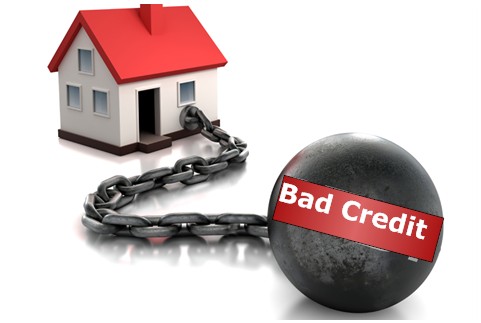
"There are 19,69 million active credit consumers, of which 53,1% are considered to be in good standing. The number of consumers with impaired credit records has slowly been deteriorating from only 37.7% in late 2007 to the current level of 46.9%."


-- Michelle Dickens, A Disguised Threat, The Witness, p. 13. 06 April 2013.

So, only about 10,45 million South Africans have credit that is in good standing. With a population of 50,5 million - of which about 18.5 million are under 18 - we have an adult population of 32 million. Of these 32 million only 10,45 million have access to credit - that is about one third. Two thirds is entirely excluded from credit.

Now - what do you need credit for? Anything from buying a car to buying a house/apartment. Although, currently, in South Africa, people have more and more started paying for daily expenditures such as food and clothing through credit as well.

Now - from those whose credit is in good standing - we have to remember that only a fraction of that segment will be able to actually afford something like a car or a house, because to have good credit doesn't mean that one has a income high enough to be able to get a loan or a bond large enough to be able to buy such things as cars and houses. So - we halve that amount - then we end up with 5,28 million adult South African citizens who can afford to buy a house or a car.

To have a house or an apartment is not a luxury - it's a basic necessity - everyone household should own one. Currently less than 10% of the South African population is capable of buying a house - one that isn't made of mud and sticks.

So - how is it that we think it is okay to have a market force decide on the distribution of something as necessary as housing? Where we end up with only a 5th of the population having access to the funds to buy a house?

If this is what we as a people think to be an effective way of distributing the goods and services that exist among the population - then yes, by all means - let's continue with what we have. But if you as I see the ludicrousness in this situation - then I suggest you investigate Equal Money Capitalism as an alternative way of distributing resources. A way where every household is guaranteed to have a house - lol, at least, then it would make sense to call it a 'household'.
Enhanced by Zemanta