Monday, April 8, 2013

Day 212: Everyone Needs a House - Why is a House not Guaranteed?

"There are 19,69 million active credit consumers, of which 53,1% are considered to be in good standing. The number of consumers with impaired credit records has slowly been deteriorating from only 37.7% in late 2007 to the current level of 46.9%."


-- Michelle Dickens, A Disguised Threat, The Witness, p. 13. 06 April 2013.
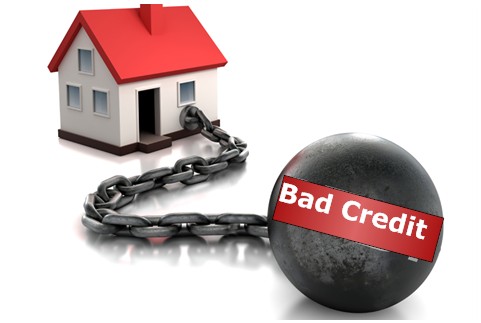
So, only about 10,45 million South Africans have credit that is in good standing. With a population of 50,5 million - of which about 18.5 million are under 18 - we have an adult population of 32 million. Of these 32 million only 10,45 million have access to credit - that is about one third. Two thirds is entirely excluded from credit.

Now - what do you need credit for? Anything from buying a car to buying a house/apartment. Although, currently, in South Africa, people have more and more started paying for daily expenditures such as food and clothing through credit as well.

Now - from those whose credit is in good standing - we have to remember that only a fraction of that segment will be able to actually afford something like a car or a house, because to have good credit doesn't mean that one has a income high enough to be able to get a loan or a bond large enough to be able to buy such things as cars and houses. So - we halve that amount - then we end up with 5,28 million adult South African citizens who can afford to buy a house or a car.

To have a house or an apartment is not a luxury - it's a basic necessity - everyone household should own one. Currently less than 10% of the South African population is capable of buying a house - one that isn't made of mud and sticks.

So - how is it that we think it is okay to have a market force decide on the distribution of something as necessary as housing? Where we end up with only a 5th of the population having access to the funds to buy a house?

If this is what we as a people think to be an effective way of distributing the goods and services that exist among the population - then yes, by all means - let's continue with what we have. But if you as I see the ludicrousness in this situation - then I suggest you investigate Equal Money Capitalism as an alternative way of distributing resources. A way where every household is guaranteed to have a house - lol, at least, then it would make sense to call it a 'household'.
Enhanced by Zemanta

Sunday, March 31, 2013

Day 211: Labour Flexibility and Equal Money Capitalism

In Zimbabwe, the Reserve Bank has been laying off people as part of desperate cost-cutting measure. The employees that had been retrenched have not received their full retrenchment packages that they are supposed to get.

In the meantime, people are unemployed and are finding it hard to find a new job, with many resorting to work in the informal section. In Third World countries like Zimbabwe, entire families are often dependent on a single person’s income. This leaves many families suddenly without the necessary funds to pay for their medical aid, while kids are not going to school anymore since they can no longer afford to pay the school fees.

Some have gone as far as killing themselves as they succumbed to the stress of unemployment and no retrenchment package in sight.

In the light of all of this, one economist had the following perspective:

“The idea that people are deserving of compensation if their employers can no longer retain them has never been properly justified. The employees’ compensation for their labour was given to them as their wage every month while they were working. Why should compensation continue when their work is no longer needed?” Robertson told IPS.”

This is your typical ‘Free Martketeer’ opinion – where people are no longer considered as being living beings, but are reduced to mere commodities, which one should be able to hire and fire as one pleases. They also have a fancy word for it: “Labour Flexibility”.

Obviously a statement like this will only come from someone whose job is secure and will not find themselves being thrown around by the merciless tides of the labour market any time soon. The Corporation as an entity on its own has gained a superior status than living, breathing, human beings. The corporation is a dead thing – it’s merely an assembled structure. Yet, it’s the corporations who are in the position of ensuring life security to people, and when this is threatened there are consequences:

““The suffering of the retrenched workers is transferred to their families, children and spouses. Tension and stress grows, leading to unwarranted domestic disputes and eventual violence and abuse of children,” Bohwasi told IPS.”

Within Equal Money Capitalism, we get this.

That is why Labour Flexibility within Equal Money Capitalism will take on a whole new dimension. Instead of Labour Flexibility entailing the freedom of the corporation to hire and fire with no restrictions in place – Labour Flexibility will be a principle of understanding that one require to be Flexible with Labour, as it is clear that one will not always be able to occupy the same job position. This may be due to fluctuations in the needs and requirements of the population, the environment or technological innovation. Thus, within this flexibility, the corporation ensures that one can continue employment elsewhere (such as the compassion department), as the corporation understands and realizes that the only capital which matters is the Capital as Life as the employees who bring life into the corpus of the Corporation– and will thus tend to its Capital with the utmost care and respect.

To Read the full article on the Zimbabwe retrenchment disaster, go to: http://www.ipsnews.net/2013/03/zimbabwe-struggling-to-pay-laid-off-workers/
Enhanced by Zemanta

Wednesday, March 27, 2013

Day 210: New Sin Tax on Sugar Introduced!

Yes - finally - after years of raising sin taxes on tobacco and alcohol - governments have started seeing that the most harmful substance was still rampantly being consumed, a substance that not only influences and damages the health of adults and teenagers - but of children too. Governments are finally raising a sin tax on any products that contain Sugar - and with Sugar is not meant Sucrose, but fructose specifically - as this is the harmful substance that acts like a poison inside the human body and causes a whole range of diseases.

Finally!!

In making sugar more expensive, we're creating incentive for people to look at what they eat and rather buy sugar-free products. So - that when you go to a fast food restaurant, a salad will not be the most expensive item on the menu, but the cheapest. And so will it be in any other restaurant and in any shop and in any market. This means that so much money will be saved on treating the consequences of excessive sugar consumption - in essence, preventing the disease before it manifests.

Finally...

Yeah...

Wouldn't that be great - to open up your newspaper and see something like this being printed? I suppose sugar and disease are both just too lucrative to be taken on and reigned in. What kind of economic system do we live in if we cannot make these kinds of obvious decisions, just because it would 'cost the economy too much' - what is the use of an economy if the people in it aren't supported by it? Where, now - people are obese and have chronic illnesses such as diabetes just because our diets are determined by what's affordable - and what's affordable is a cheeseburger. And a cheeseburger is full of high fructose corn syrup - and that will slowly kill you.

I suggest all governments implements a sin tax on Fructose to Prove that they Care about the well being of the citizens in the country. And I suggest that if such a sin tax would come at a great cost in terms of industries being hit and jobs being lost - that the economic system in itself is redesigned so that a decision that is made to support life on the one hand does not require a trade off where life is harmed on the other hand. That's just basic common sense. For suggestions on such economic systems, visit www.equalmoney.org and http://economistjourneytolife.blogspot.com/p/emc.html.
Enhanced by Zemanta

Tuesday, March 26, 2013

Day 209: Health Care or Disease Care?

Please watch the following documentary for additional information:
Escape Fire: The Fight to Rescue American Healthcare


In the US 75% of healthcare costs go towards patients suffering from preventable diseases. Instead of focussing on prevention within educating people on lifestyle and what consequences come along with what lifestyle – the healthcare system only bothers with dealing with the aftermath.

A person suffering from diabetes, who as a result has heart problems – will be filled with stents each time there’s a heart problem. Only symptoms are alleviated and the problem remains. This method of treatment is of course very good for the pockets of the medical industry. The patient is not getting better, he’s also not really dying and he keeps on coming back. The very point that the cause and origin of so many people’s preventable chronic disease is not even discussed is questionable to say the least. This clearly shows a lack of integrity and care as it becomes obvious that an actual solution is not was is being sought after – but merely the management of the disease.

In Equal Money Capitalism, we reverse everything. Instead of tending to Consequence we focus on Prevention. Education will have a primary role within Health Care, within making people aware of how they can best support themselves and their bodies so each one can live at optimum capacity. People who pursue a career in medicine will be those who truly have a passion for the practice and really want to take care of people (read Day 188: Simple Solutions in Equal Money Capitalism on how this is made possible).

Changing our approach to health care will not only save us tremendous costs in monetary terms – but will also save on a lot of harm as the result of overtreatment and limited symptomatic relief. Consider also that a lot of patients only go to the doctor and are on prescribed drugs because they are overworked and cannot cope with the pressure of the demanding system that we have today. In such cases – medicine is not the solution, but a change in lifestyle – which is exactly what Equal Money Capitalism is all about.
Enhanced by Zemanta